DIGITAL EDUCATION ADOPTION IN COMMEMORATION OF 16 JUNE 1976 MASSACRE
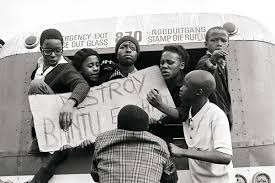
The introduction of the Bantu Education Act in 1953 made the language of Afrikaans alongside English compulsory as a medium of instruction in schools in 1974. On 16 June 1976, between 3 000 and 10 000 students mobilised by the Action Committee of the Soweto Students Representative Council (SSRC) supported the Black Consciousness Movement march peacefully to demonstrate and protest against the government’s directive. This march resulted in a massacre of about 700 students by apartheid police.
In 1997, Post Apartheid South Africa, a new controversial outcomes-based education (OBE) curriculum entitled Curriculum 2000 (C2000), was introduced and later amended and adapted to become Curriculum 2005 (2005) when it became clear that C2000 could not be implemented by 2000. Consequently, approximately 200 000 of the learners writing the Grade 10 examination in 2003 failed and also the same year that the White Paper on electronic Education (e-Education) was drafted.
COVID-19 has shown that digital platforms are no longer a luxury but an important component of the education process. The UN warns that to ensure that quality education is provided as a public good and a human right, with a special focus on the disadvantaged, society cannot afford to miss out on the power of the digital revolution. Digital education is key to transforming and enhancing future learning that can equip learners with the skills they need to participate in the digital economy.
What is Digital Education?
Digital education is the innovative incorporation of modern technology and digital tools to assist the progress of teaching and learning. It is also known as Technology Enhanced Learning (TEL), digital learning, or e-learning. Digital education is the way forward to seeking education through the means of technology and digital devices.
The Benefits of Digital Education System
- Individualised Learning Experience: The contemporary digital format allows teachers to customise the study material based on an individual’s learning speed and ability.
- Students become Smarter: Plays a significant role in magnifying their efficiency, learning ability, and productivity.
- Unlimited Information: The digital education has made possible the world of the internet’s vast and loaded with information, most of which is freely accessible.
- Smart Classrooms: Classrooms equipped with a TV, or a projector makes it is easy to shift from a regular classroom session to an interactive digital session.
- High Engagement Learning: Digitised education system offers interactive and game-based learning sessions gain higher engagement from leaners.
- Ease of Sharing: Preserving and sharing information is just a click away which saves students a lot of time and physical labour.
- Accountability in Leaners: The digital education system incorporates real-time evaluation and system-generated performance reports which increases the transparency of assessment.
Digital Education Triple Challenge
Inequality, poverty, and unemployment are interdependent socio-economic phenomena labelled the ‘triple challenge’ in South Africa. The triple challenge of the digital education system:
- Digital divide education which refers to efforts to bridge this gap by providing all students equal access to digital technologies.
- Digital poverty which refers to the lack of access to digital technologies, including hardware (like computers and tablets), software, and reliable internet connectivity.
- Digital entrepreneurship which refers to the practice of starting and operating a business venture in the digital realm.
The learners of 2024 need to rise up and take a stance to address the above-mentioned challenges, just like the youth of 1976 who were supported by the Black Consciousness Movement which was led by Bantu Biko at the young age of 22 years. COVID 19 however has changed the debate on digital education system from a question of if to a question of how.
“Education is the most powerful weapon you can use to change the world.” – Nelson Mandela